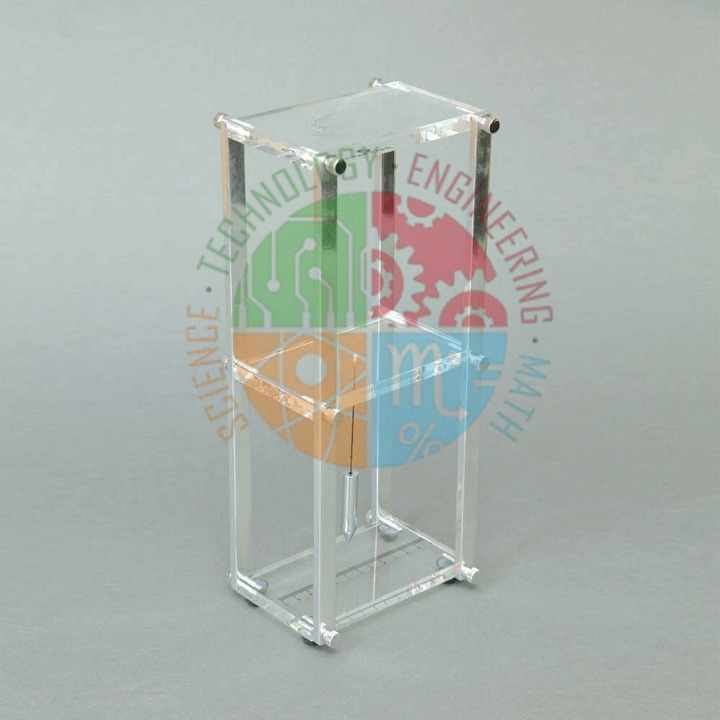
Quick Answer:The Leaning Tower of Pisa model, also sold as a gravity tower model, is a tilted acrylic-and-metal replica of the tower with a plumb line hung from its centre, used to show why a leaning structure stays up while its line of gravity falls inside its base.
Last updated: 18 October 2026
Key Features
Cylindrical replica with 8 tiers of arched galleries.
Built with a lean of about 3.97°.
Plumb line suspended at the centre to show the line of gravity.
Acrylic plates on a reinforced metal frame.
Stable base for tabletop demonstration.
Technical Specifications
Specification
Value
Material
Acrylic plates with a reinforced metal frame
Design
Cylindrical Romanesque-style replica, 8 tiers of arched galleries
Tilt
About 3.97°
Indicator
Plumb line suspended at the centre
Base
Stable tabletop base
Supplied
Ready to use
How It Is Used
The plumb line hangs straight down from the centre of the tower, so students can see where the vertical through the centre of gravity meets the base. As long as that point lies within the base, the tilted tower stays standing. The model ties ideas of stability and equilibrium to a well-known building.
Frequently Asked Questions
What does the plumb line on the Leaning Tower of Pisa model show?
It hangs vertically from the centre of the tower and marks the line along which gravity acts. Students can see that this line still falls within the base despite the tilt of about 3.97°, which is why the tower stays up.