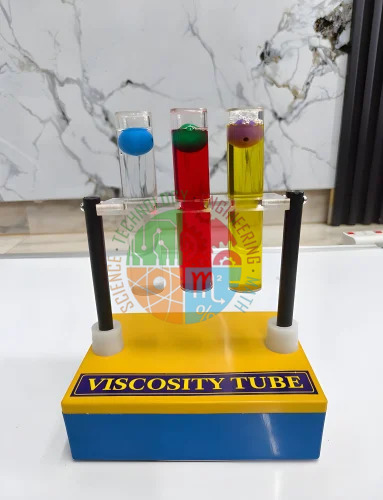
Quick Answer:The Viscosity Tube Model uses transparent tubes of liquids with different viscosities and small test balls to show how liquids resist flow. Timing identical balls as they fall through each tube compares the liquids directly.
Last updated: 18 October 2026
Key Features
Transparent tubes for clear observation.
Supplied with sample liquids and small test balls.
Compares fluid resistance and flow rate.
Links viscosity to oil flow and lubrication.
Technical Specifications
Specification
Value
Components
Viscosity tubes, sample liquids, small test objects (balls)
Tubes
Transparent
How It Is Used
The tubes are stood upright on a stable stand, each filled with a different liquid. Identical small balls are dropped in together and students time how long each takes to fall; the slower the ball, the more viscous the liquid.
Frequently Asked Questions
How does the Viscosity Tube Model compare liquids?
Identical small balls are dropped into tubes holding different liquids and the time each takes to fall is noted. A slower fall means a more viscous liquid.